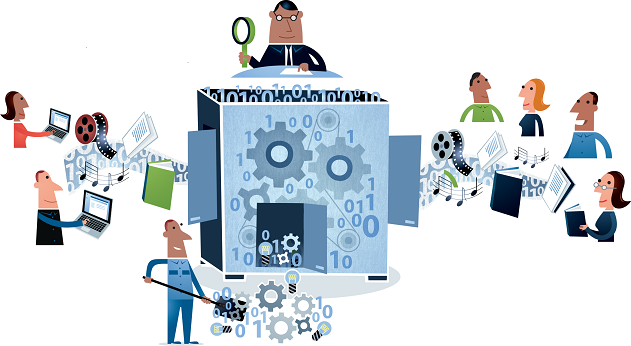
IoT consist of a complex ecosystem and will be delivered through partnership and collaboration – African perspective. When it comes to adopting technologies, Africa is often a unique market for obvious reasons i.e. lack of infrastructure and diverse economies. Our uniqueness can make Africa an implementation frontier. However Africa’s regional diversity requires different approaches to implementing IoT Solution. The localisation of global use cases will be key to implementation in sectors like agriculture. Health care and logistics. Firstly lets us unpack IoT The discussions around IoT continue to dominate in all government and business platforms. The prospect of a myriad of interconnected devices inspires both hope and fear. For business, IoT promises to deliver operational efficiencies and enabling faster decision making. Business leaders are also tackling the fears around skills and loss of jobs. In the midst of...
Popular posts from this blog
Driving digital democracy in Africa
Driving digital democracy in Africa. Africa has pressing problems that can hinder digital democracy and evolution - that of digital inclusion and education. We are making great strides in connecting people but the education of opportunities of digital is still lacking. I am calling for private companies and government to unite on this issue of education. Furthermore, we are calling for the National Digital Inclusion strategy that will firstly, increase awareness, skills a nd opportunities presented by digital. Secondly and most importantly, we need national strategies to grow the economy through the use and creation of digital products. Thirdly, improve access by revisiting the costs of connectivity. Its important for all players to understand that digital products and services are becoming the default option for accessing public services, information, entertainment and communicating with other people. Our next report is - Is financial inclusion linked to digital inclus...
The fourth Industrial Revolution
Introduction According to the World Economic Forum, We stand on the brink of a technological revolution that will fundamentally alter the way we live, work, and relate to one another. In its scale, scope, and complexity, the transformation will be unlike anything humankind has experienced before. We do not yet know just how it will unfold, but one thing is clear: the response to it must be integrated and comprehensive, involving all stakeholders of the global polity, from the public and private sectors to academia and civil society. The First Industrial Revolution used water and steam power to mechanize production. The Second used electric power to create mass production. The Third used electronics and information technology to automate production. Now a Fourth Industrial Revolution is building on the Third, the digital revolution that has been occurring since the middle of the last century. It is characterized by a fusion of technologies that is blurring the lines be...

Comments
Post a Comment
Thank you for your interest